Download Issue 4 here or pick up a copy from Floral & Feast in Ranfurly or The Store in Naseby.
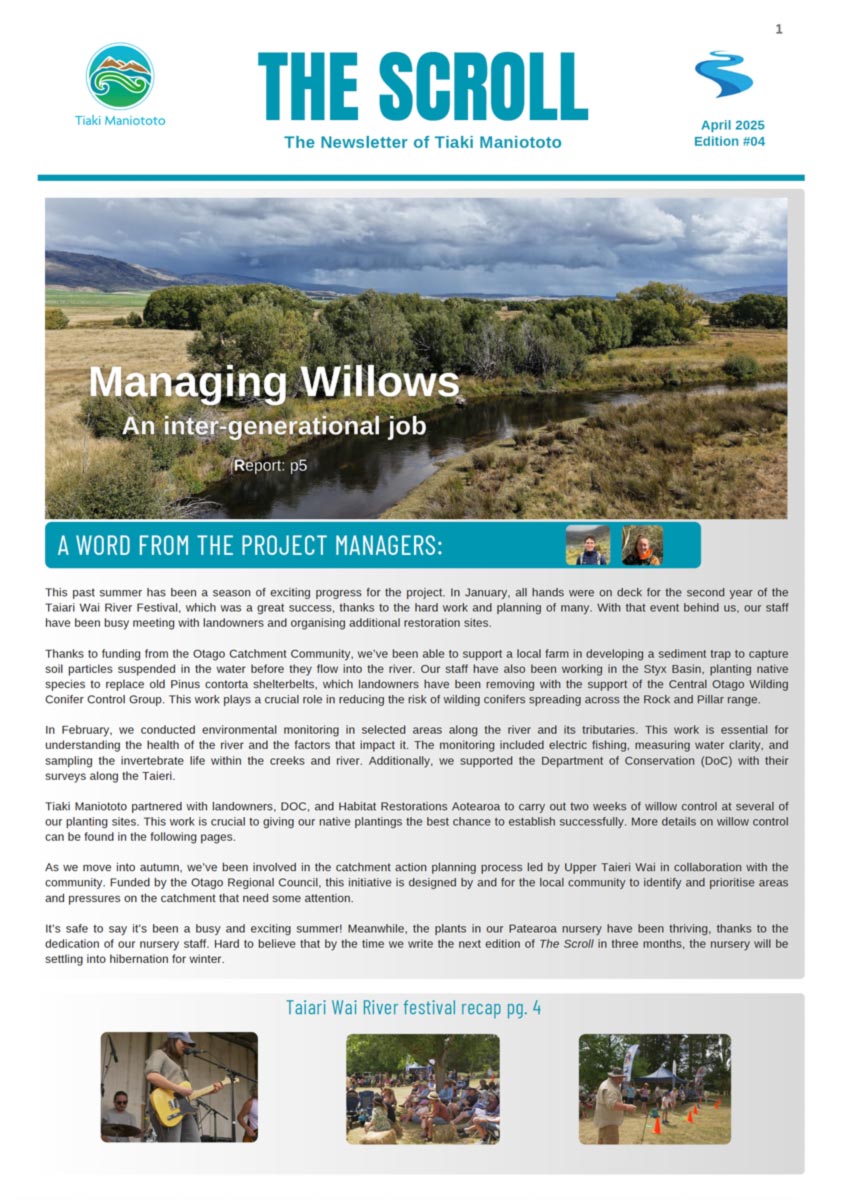
Download Issue 4 here or pick up a copy from Floral & Feast in Ranfurly or The Store in Naseby.
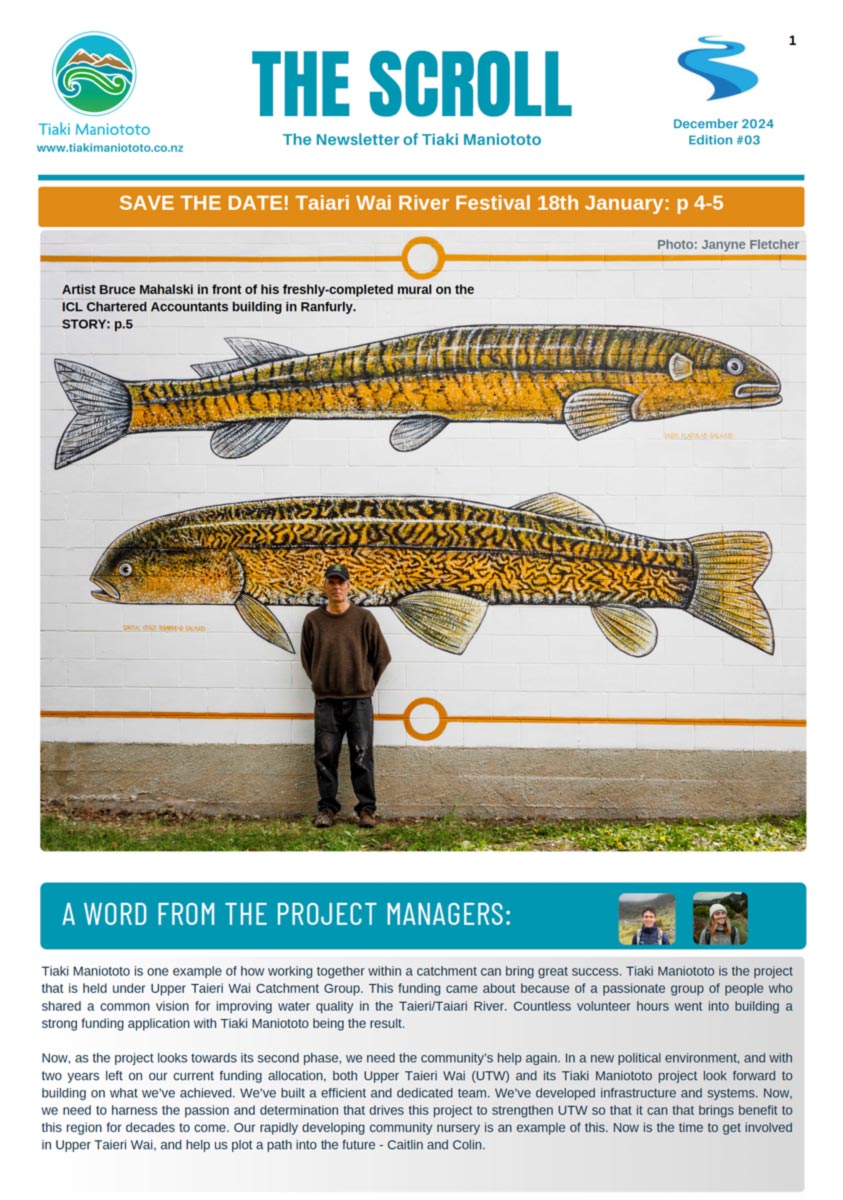
Download Issue 3 here or pick up a copy from Floral & Feast in Ranfurly or The Store in Naseby.
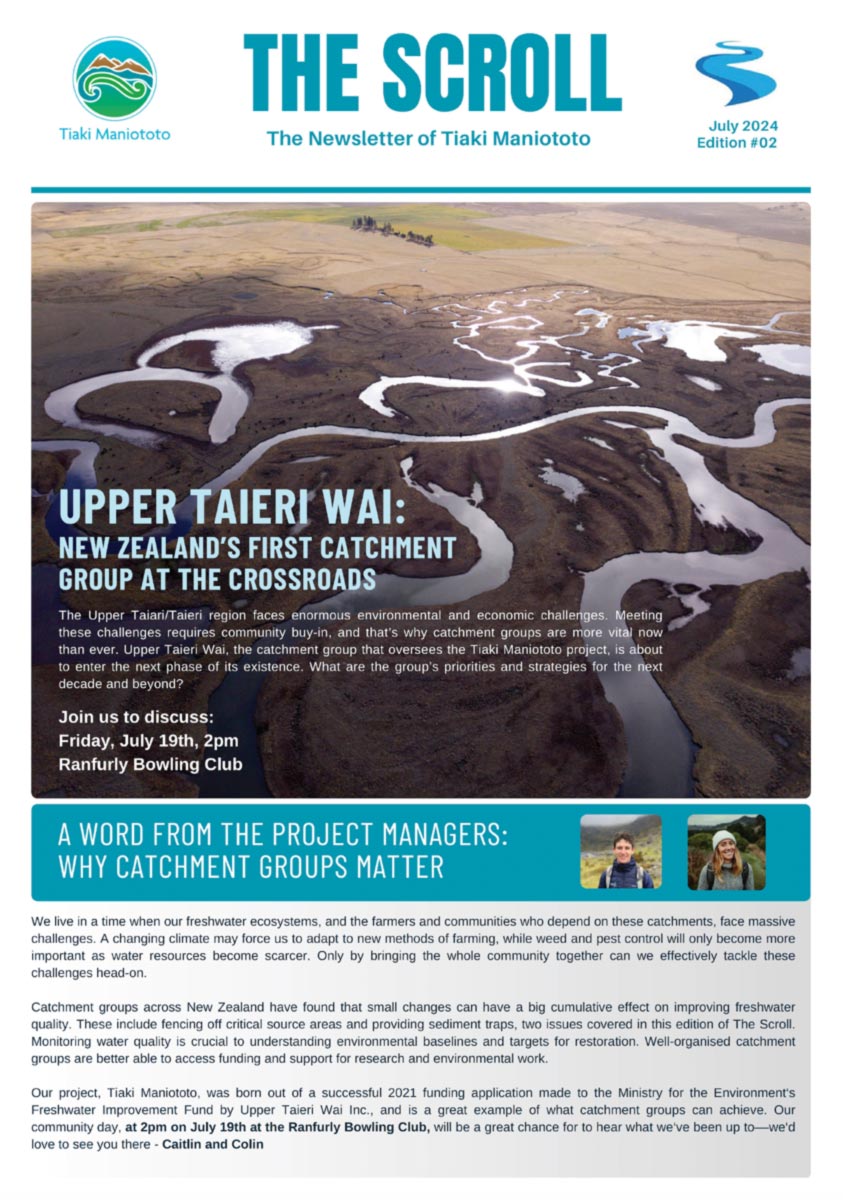
Download Issue 2 here or pick up a copy from Floral & Feast in Ranfurly or The Store in Naseby.


All on farm work was delivered as part of the Regenerating Wetlands Partnership between NZ Landcare Trust and Fonterra. Funding was provided to support dairy farmers on the Taieri Plains to enhance critical wet areas on farm.

Understanding the potential impacts of climate change in the Taiari catchment helps us to look after our freshwater ecosystems – both now and into the future.
Within the Taiari, climate change is predicted to increase extreme weather events like floods and droughts. Increased storms and flooding could increase the amount of sediment and nutrients flowing into waterways, greatly affecting the plants and animals that live there.
The potential vulnerabilities of freshwater ecosystems and catchment values to climate change were assessed in a recent study. The assessment includes a suite of potential management actions which will support ecosystem resilience.
This study was commissioned through the Te Mana o Taiari project, a Ngā Awa river restoration project. Te Mana o Taiari is a project co-led by the Department of Conservation (DOC), Te Rūnaka o Ōtākou, Kāti huirapa Rūnaka ki Puketeraki and Otago Regional Council to improve the biodiversity values, resilience and mana of the awa by working in collaboration with the catchment community. DOC’s contribution to the project is funded by the Ngā Awa river restoration project.
The Climate Change Vulnerability Assessment was led by University of Otago experts Gerry Closs, Marc Schallenberg and Christoph Matthaei. The assessment is biodiversity-focussed and is presented in the following formats:
Taiari / Waipōuri Uplands
Māniototo Basin
Mid Taiari
Lower Taiari
The Climate Change Vulnerability Assessment is supported by another document providing climate projections and detailing the ‘Climate change impacts and risks for the Taiari River catchment’ by Mike Goldsmith. A report summary is also available.
Finally the catchment community has already participated in two climate strategy workshops facilitated by Shane Orchard – reports available: te-mana-o-taiari-matatu-ki-te-taiao-orchard-2022 and Te Mana o Taiari Tohu te Taiao. As our knowledge develops, we will continue to refine our strategic approach to climate change.
Support from the Healthy Taiari Project enabled energy audits on dairy sheds on seven farms on the Taiari Plains. These audits resulted in recommendations for improving the energy efficiency of the dairy sheds, as well as assessing electricity supply contracts to identify where cost savings could be achieved.
In the wider scheme of dairy farm, electricity typically constitutes only a small amount to the total operational costs, in the range of 0.5% – 2% (excluding irrigation). For this reason, time and effort is often spent on reducing costs in other areas of the business. All of this means there are often energy and cost-saving opportunities at the dairy shed which have not been investigated.
Using evidence from past studies, auditors were able to identify opportunities in all areas of the dairy shed for the participants of the programme. From over-sized hot water cylinders, uninsulated milk vats, heat recovery, and electricity tariff adjustments, thousands of dollars in savings per year were identified for each of the participants in the programme. Heat recovery is the biggest opportunity to improve efficiency for all sheds visited.

A presentation given to DairyNZ members on the programme and the possible opportunities for energy and cost savings is available to download here (2MB).
Key findings from the audits were:
The inaugural Tiaki Maniototo Taiari Wai River Festival, held on January 20th at the former Pātearoa school was a great success, with over 300 people showing up to enjoy some great music, food and learning opportunities.
Starting a new festival is always a gamble, but in the sparsely-populated Māniatoto the odds are even higher, so it would be fair to say we organisers lost plenty of sleep the night before, wondering if anyone was actually going to show up on the day.
A team of local volunteers put in a big effort to get everything set up, preparing the site and helping Ewan Mason set up his sound system on the trailer generously provided by Ranfurly Transport. In true Māniatoto style, seating was hay bales borrowed from local farmer Ian Hore.
The next morning, we woke to fierce winds howling across the Māniatoto plain. These were forecast to increase. However the winds abated just as the first band started and we were treated to a beautiful day, with the boisterous westerly taking the edge off the heat.
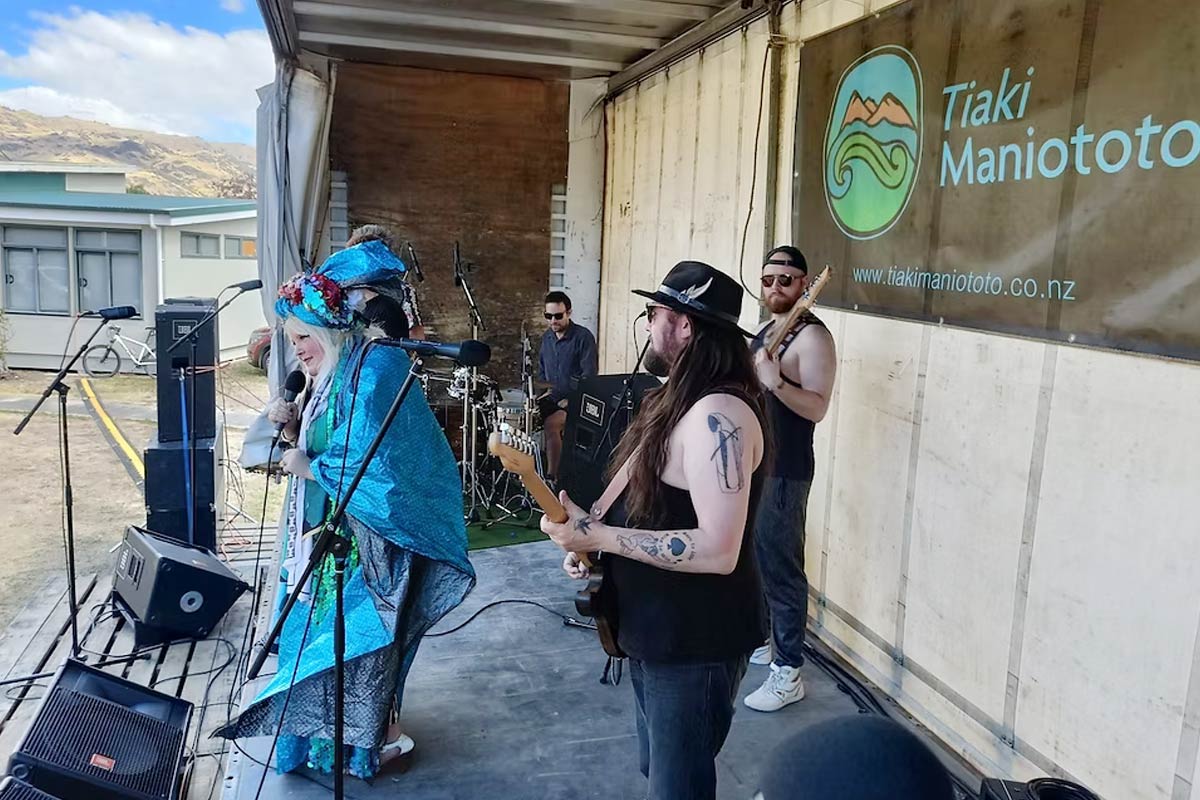
In the end, the event was everything we hoped it would be and more —a great country festival, well-attended by locals and visitors from outside the area. Food and drink was taken care of by the Waipiata Country Hotel and Alchemy Alley who provided a range of local delicacies to keep everyone going while Sue Tisdall kept the coffee flowing from her Java Express trailer,
Inside the school building we had some wonderful learning opportunities. Kids and adults alike were enthralled to learn about freshwater ecology from Otago Regional Council’s Jack Mathieson, local lizards from Carey Knox and prehistoric Otago forests from Mike Pole.
Dunedin bands Jo Little and Jared Smith, Maplewood String Band and Tahu and the Takahē kept everyone entertained with over four hours of music. Fish and Game provided entertainment for the kids with their casting game.
We’d like to thank Ranfurly Transport, Ewan Mason, all the volunteers, vendors and bands as well as Fish and Game and Otago Regional Council. And finally, big thanks to the Otago Community Trust, whose generous funding allowed it all to happen.
Based on this year’s event we can confidently say we will run it again next summer, bigger and better, and that’s entirely due to the support the community gave it this year. So thanks everyone for being part of it. See you all in 2025!
Otago is a real hotspot for the tiny native fish called galaxiids, with more species living here than any other part of New Zealand (19 and counting). Most of these species are now under threat from competition with trout, altered stream flows and degraded habitat. The Ranfurly district is home to a nationally endangered species called the Central Otago Roundhead galaxias (Galaxias anomalous). This small fish is found only in the Upper Taiari/Taieri catchment and in a few streams of the Manuherekia catchment.
Spec Creek, a tributary of the Kyeburn, is one of the best places in the world to find Central Otago roundheads—its naturally low flow means that few trout find their way up into the creek, and water quality in the stream is generally high.
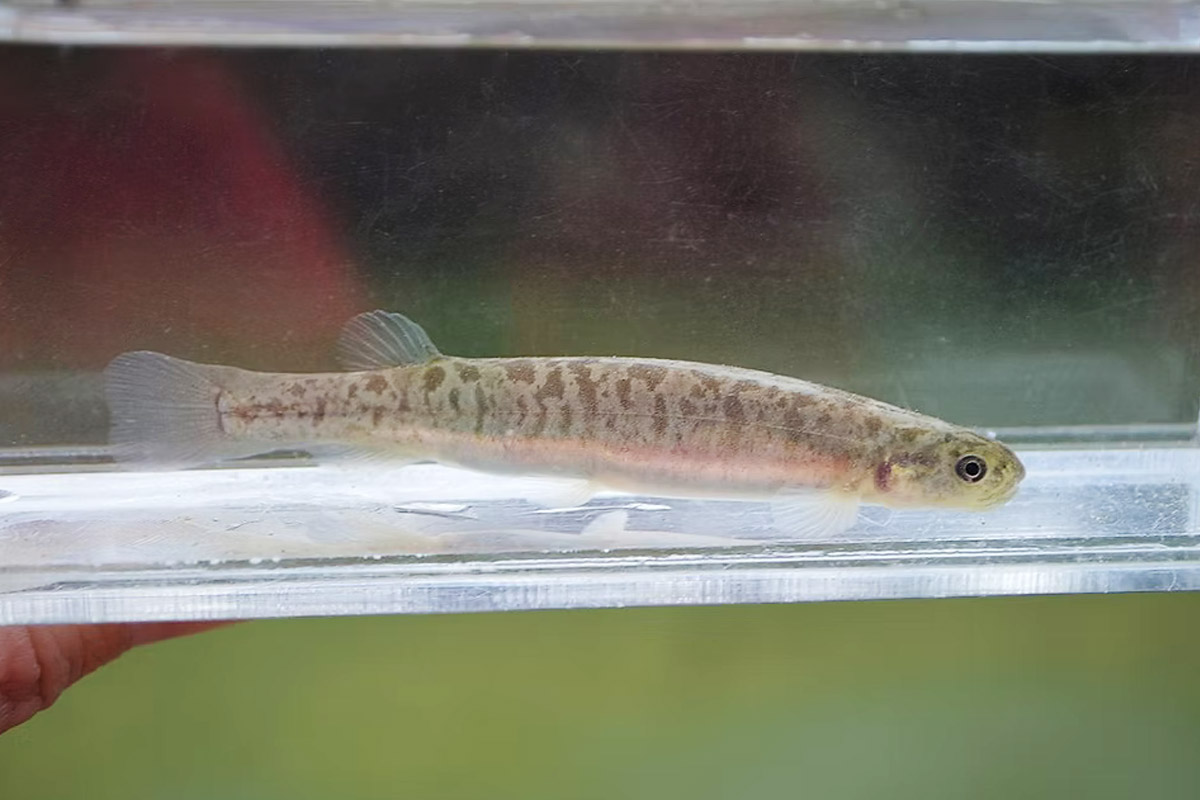
Now, Phil Smith of Glenspec and Hamish MacKenzie of Kyeburn station have, with the help of Tiaki Maniototo, fenced off a stretch of Spec Creek on their properties, creating a corridor from which cattle will be excluded. In order to do so, Phil has had to install a stock water system to compensate for the loss of stock access. They’ve also created a carpark and a kiosk for signs. Willows will be controlled in the sanctuary and trout periodically removed.
It’s a big effort and expense, but Phil says looking after the environment is important to all farmers in the Kyeburn. “I believe education is a big thing. If we can educate people about how endangered the species is, we can then start doing something about it.” The reserve is dedicated to freshwater ecologist Matt Hickey, who worked closely with the Kyeburn community and who sadly passed away last year.
The Spec Creek reserve, thought to be the first privately-created reserve for galaxiids in the country, is, says freshwater consultant Richard Allibone, highly significant. “Of all the Otago galaxiids, this is the least protected of all of them. So [Phil and Hamish] have taken a step that no one else has.”
It is, he says, representative of a big shift in the general attitude of the farming community, from “we know nothing about these things and don’t really care about them, to actually, they’re special to our area, and we’re doing something to protect them. It’s a whole switch in how we’re treating the stream.”
Spec Creek galaxiid sanctuary will be open to the public from Saturday 18th November.
Photo Credit: On Lee Lau
Tiaki Maniototo is all about working with farmers and landowners toward a healthier Upper Taiari/Taieri river. An important aspect of that is monitoring water quality, which helps us gain more knowledge around the health of the waterways and guides our future efforts.
In conjunction with the Maniototo Irrigation Company, we’re planning to develop a water monitoring programme this coming spring. “We’re looking at excess sediment runoff and nutrients such as nitrogen and phosphorus,” says Eilis Hogan, who’s helping to run the programme.

“We also are going to be doing macroinvertebrate testing, as they’re a good indicator of water quality. Eilis explains that macroinvertebrates include mayfly and caddisfly larvae, which breed in our streams and are very familiar to trout fishermen.
In order to learn more about the health of waterways in the Māniatoto, Eilis and the rest of the team have been doing stream surveys, using fyke nets, minnow traps and electric fishing gear to temporarily stun fish so they can be counted. Water quality in some of the smaller tributaries seems to be fairly healthy, “We’ve been finding lots of eels and trout,” she says.
There are also encouraging numbers of galaxiids (native fish) at some sites. “Over two days on Boundary Creek, we recorded over 530 individuals along a two kilometer stretch. They were just really abundant just throughout the stream.”
Hogan’s first love, however, is birds. She worked as an ornithologist in Ireland, before coming out to New Zealand with her partner Colin, who is also on the Tiaki Maniototo team. Bird surveys in the upper Taiari scroll plain, she says, have shown what a special place it is for wildfowl.
“We’ve found lots of grey teal, shovelers and white faced herons. We’re going to look for marsh crakes and bitterns this breeding season.”
Since joining the team at the start of this year, Eilis has enjoyed learning more about the beautiful Māniatoto. “I love doing all the fieldwork – looking at the scroll plain and all the oxbow lakes. It’s really different from what you see anywhere else.”
If farmers or landowners would like stream health testing done on their property, Tiaki staff are available to do so – please just get in touch. Having this information may help with developing farm plans. In areas where water quality is reduced, we can help those landowners take steps to improve it.
Get in touch:
comms@tiakimaniototo.co.nz
022 062 3522
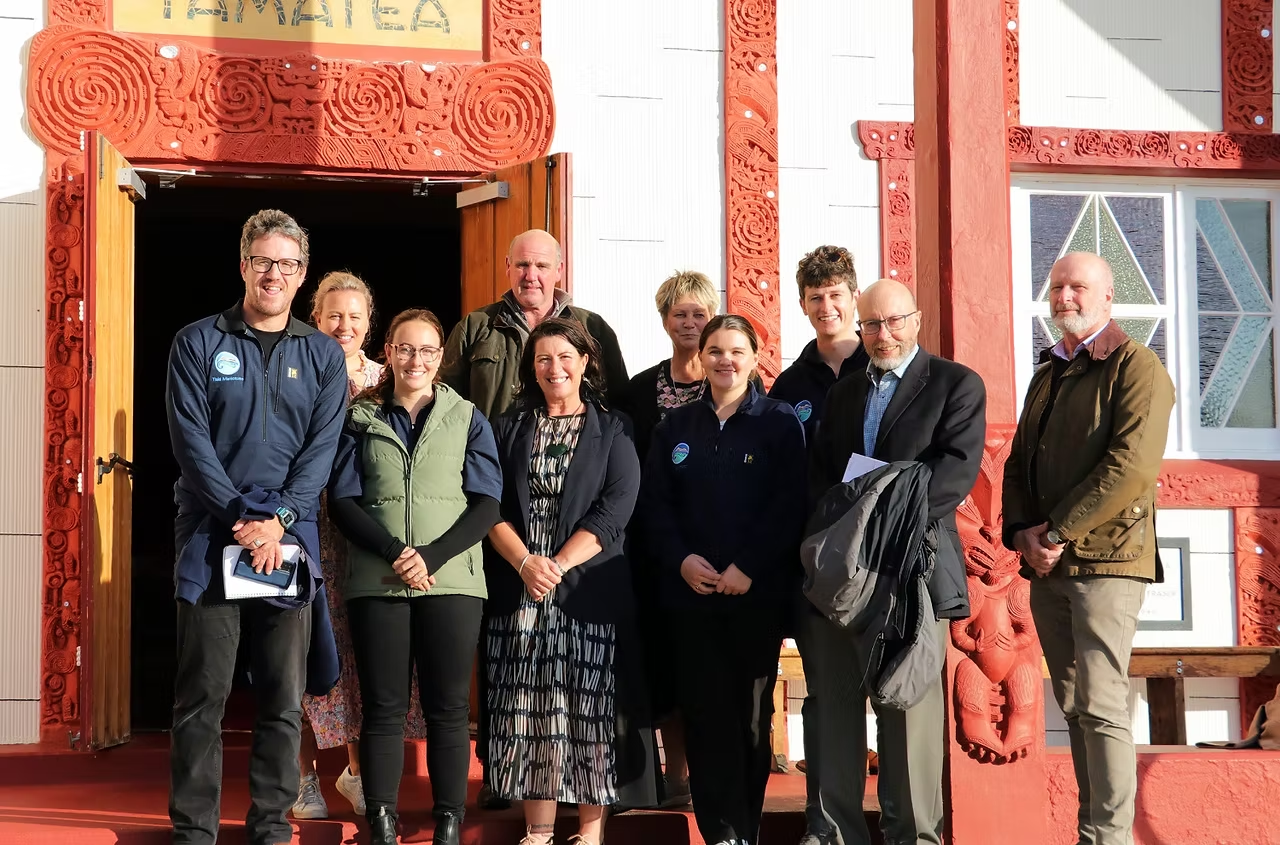
The Tiaki Māniatoto team had a fantastic day at the Te Mana o Taiari hui organised by the Department of Conservation and graciously and generously hosted by Te Rūnanga o Ōtākou. This event was all about bringing together the various groups working to better environmental outcomes for the Taiari river.
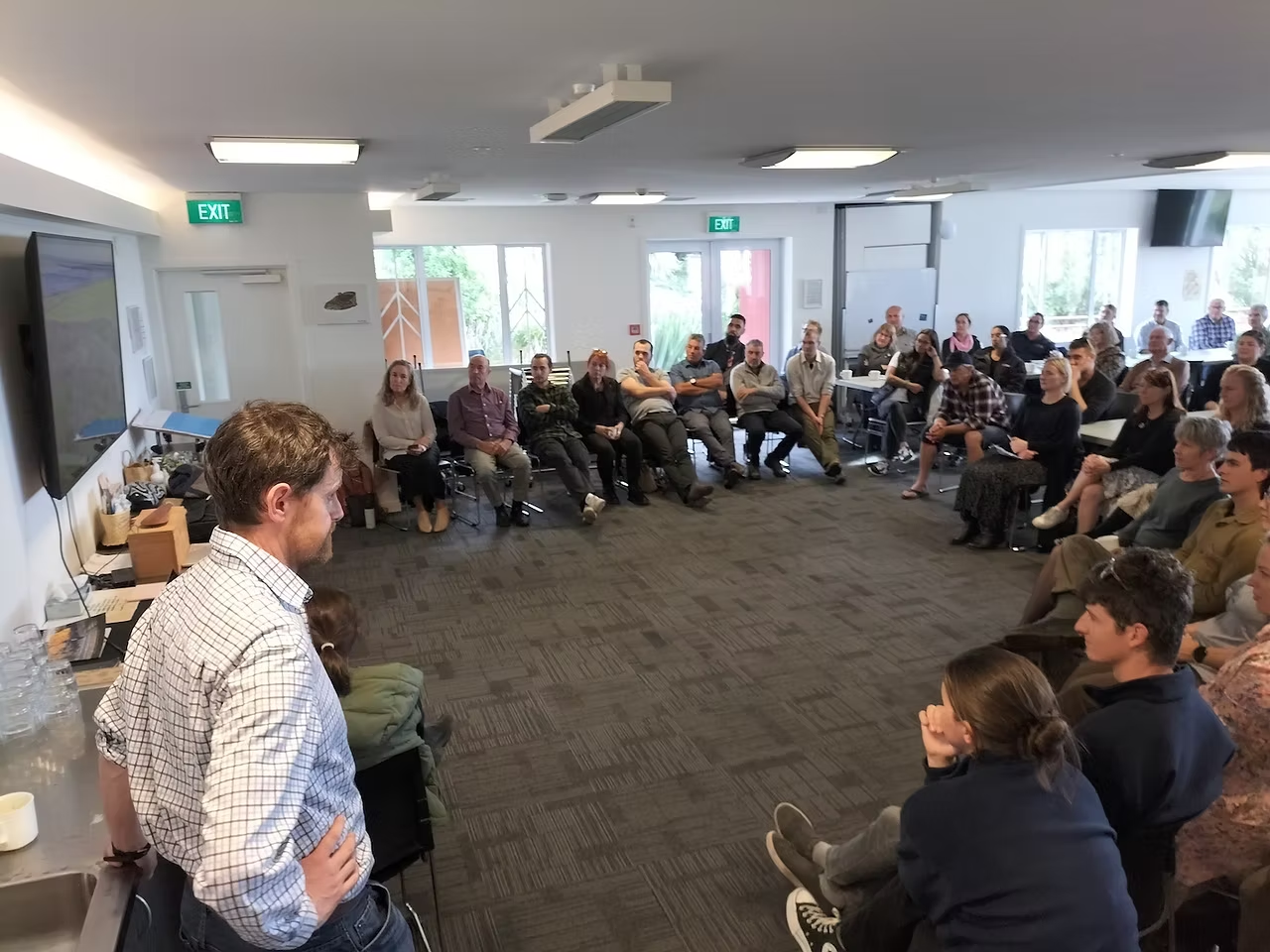
Everyone learned a lot from each other and it was incredible to see how many people and groups are active in the catchment. A lot of passion for the awa and the land. The challenge for all of us now is moving forward in a unified direction.
A big thanks to Connagh Wesley @Kaiwhakaahua Studio for the fantastic group shot…