Upper Taieri Wai has funding from the Ministry for Primary Industries to support integrated farm planning across the whole of the Taiari / Taieri river catchment.
Integrated farm planning supports all parts of a farm business and can give you confidence that you are staying ahead of challenges coming your way and making the most of opportunities – for your business and within your catchment.
This project will deliver tools and information that helps you farm with confidence while also achieving broader catchment goals – including through identifying opportunities for shared projects with collective benefits. The project aims to help farmers and catchment groups with the great work they are already doing, and to amplify this.
To help inform our understanding of priorities for freshwater management in the catchment, an assessment of water quality monitoring in the catchment has been undertaken.
This work:
outlines details of current and historic water quality monitoring carried out by the Otago Regional Council and other organisations to date,
summarises what is known about water quality state and trends from monitoring and investigations, drawing on existing readily available reports and previously unreported water quality investigation data collected between 2019 and 2024, and
identifies water quality issues and associated information gaps and monitoring priorities.
This assessment provides valuable insights to help understand our river – its vulnerabilities and special characteristics. It also provides insights for farm management/planning.
You can access the full reports for each section of the Taiari here:
Upper Taiari
Mid Taiari
Lower Taiari
The following short reports summarise key findings from the full reports, and recommend actions for landowners, to help further improve river health in the Taieri catchment.
Upper Taiari
Mid Taiari
Lower Taiari
Overview of water quality in the Taiari catchment
This map indicates how water quality in the Taiari catchment compares with other monitored rivers in rural areas of New Zealand.
This information can be used to understand potential priorities for land management actions or mitigations to support or enhance water quality or river health.
Water quality information in these maps is based on monthly State of the Environment monitoring carried out by the Otago Regional Council (median values are presented for the five years ending June 2022), compared with median values for rivers in other rural areas sourced from LAWA. For further detail about river health in the Taiari catchment please refer to the reports on this page (above).
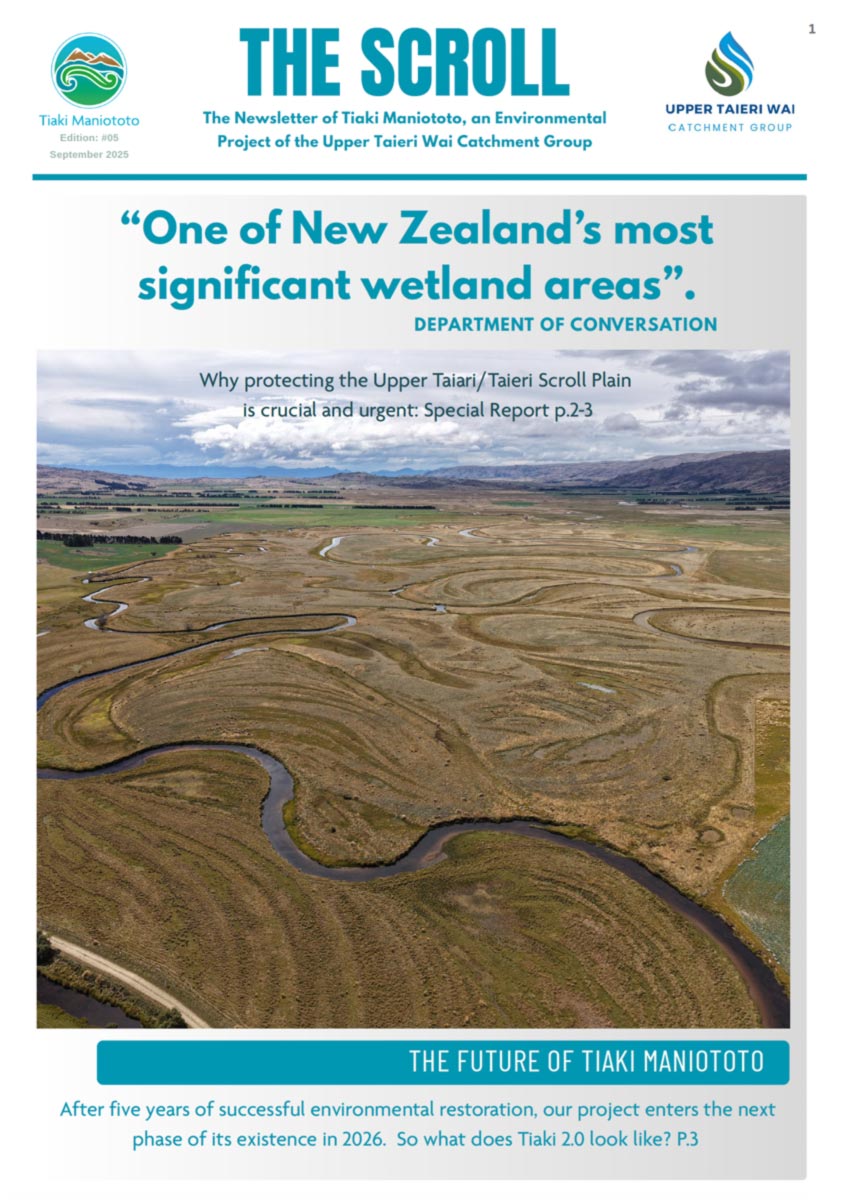
Tiaki Maniototo is an Upper Taieri Wai project funded by the Ministry for Environment Freshwater Fund.
Our mandate is to preserve, protect and enhance water quality, recreational, cultural, biodiversity and economic values in the Upper Taiari. This is to be achieved through riparian fencing, planting, pest control and the development of a catchment management plan in consultation with farmers, Fish and Game, Herenga ā Nuku, the Department of Conservation and the Maniototo Irrigation Company.
The Mid Taieri Wai group is a local community led group, established in 2022 to promote sustainable land use and water management practises in the mid Taieri catchment.
The group seeks positive outcomes for our environment and works to ensure our rural communities are vibrant and economically sustainable.
The Mid Taieri Wai catchment group encompasses 200,000ha of land area in the Lee Stream, Clarks Junction, Strath Taieri and Nenthorn areas.
The group has hosted a number of workshops and planting days. In 2022 Mid Taieri Wai were the recipients of the Westpac Water Care Fund, the group undertook several Stream Health Assessments in the area to form a baseline of data. This will help drive projects going forward.
The group have also educated farmers and school groups on how to carry out their own Stream Health Assessments.
NZ Landcare Trust and Watershed Solutions Ltd have been supporting freshwater enhancements in the Ōwhiro Stream since 2021.
The Ōwhiro Stream catchment extends up to the Chain Hill, Wingatui and Saddle Hill areas, making its way through the residential and industrial areas of Mosgiel and through the Taieri Plains before reaching the Taieri River at Allanton. According to ORC State of the Environment monitoring, the Ōwhiro Stream was found to be one of the most degraded waterways in Otago! Despite this, recent surveys have found that the stream supports a diverse array of life including at-risk (declining) populations of longfin eel, inanga, giant kōkopu alongside other freshwater fish (shortfin eels and common bully).
Areas of interest:
Stream health monitoring
Taieri College students have been monitoring Ōwhiro Stream at two sites over the past two years. The upstream is at Ōwhiro Ave and the downstream site is at Riverside Road. Data is collected and students will analyse the differences in 2024.
As part of an ECO Fund application, stormwater sampling, fish, invertebrate and habitat surveys are being conducted in 2024 to help build a picture of the health of the stream.
Education
Taieri College and East Taieri Primary School students, along with the Mosgiel Girl Guides and Rangers have been learning about the health of the stream and what lives in it, as part of a Curious Minds funded Participatory Science Platform project.
Action in the catchment
Riparian planting has been undertaken at Ōwhiro Ave to help protect stream banks and enhance native ecosystem in the area. A further planting site has been identified on DCC Parks land at Paterson Road, Wingatui. The local community held a planting day at this site in May, with the help of funding from the DCC Biodiversity Fund and with the support of Te Nukuroa o Matamata.
Please get in touch if you want to know more or wish to be involved.
Pest species (including both pest animals and plants) are an increasing challenge for farmers and land managers across New Zealand. In the Taiari / Taieri catchment – where productive farmland underpins community wellbeing – effective pest control is essential to protecting productivity, land, water and biodiversity.
What is a pest?
In New Zealand, a pest is any animal or plant that harms the environment, economy, or our cultural values – especially invasive species that threaten native biodiversity and/or farm productivity.
At the same time, it’s important to acknowledge that some pest species also have recreational or practical value. Deer and pigs, for example, are valued by hunters and provide a source of kai for many. Similarly, some willow species can play a role in erosion control and shade. Effective pest management needs to strike a balance, ensuring management efforts are grounded in local values and community priorities.
Keeping the Pressure On
In recent years, populations of critical pest species have increased in several regions, as reported by both farmers and the Department of Conservation. Their impacts reach beyond agriculture – affecting biodiversity, slowing native regeneration, reducing carbon storage potential, and threatening future opportunities through the Emissions Trading Scheme (ETS) and biodiversity credit systems.
Now more than ever, it’s important to keep the pressure on. Gains made by groups like OSPRI in possum control are significant – but without continued collective effort, these gains may be lost. Lots of great work is already underway on some pest species, including by the Maniototo Pest Management company and the Central Otago Wilding Conifer Control Group. Can this work be further supported or expanded to other species or areas in the catchment?
Our Work to Date
The Healthy Taieri project has been actively building a clearer picture of pest issues across the catchment – surveying farmers, assessing opportunities for deer and possum management, and working with landowners and organisations that are active in pest and weed management to explore how a more coordinated approach could help pest management in the catchment.
In early 2025, we ran a pest survey across the upper and mid catchment to understand how farmers are managing pests and whether there is support for additional collective and coordinated approaches to pest control in the catchment. You can read the results of the pest survey here.
What’s next?
Based on the results of the survey, and discussions with a number of farmers and representatives of organisations involved in pest management, we’re now assessing the feasibility of a community managed pest control entity for the mid Taieri area, building off the experience of the Maniototo Pest Management Company. We will be contacting farmers in the area to understand their perspective – or feel free to get in touch with us directly.
Biodiversity includes all the living things on your farm — from plants and animals to soil life and insects. As a farmer, you see how these systems work together to keep your land productive.
You understand biodiversity because you live and work amidst it every day.
The Taieri catchment is one of the biological powerhouses of mainland New Zealand – it is a biodiversity hotspot – both in the diversity of plants and animals that occur here, and in their risk of being lost.
Like much of New Zealand, the catchment is a vastly altered ecological system. Hundreds of years of burning, grazing, and the spread of introduced plants and animals has altered this landscape forever.
We cannot go back to what was originally here. But we can look after what we have now, fortifying our farms and wilderness areas by promoting rich biodiversity in these places.
Native species like snow tussock, long fin eel / tuna, freshwater crayfish/kōura, New Zealand falcon / kārearea all play a key role in our ecosystems, as do natural habits such as upland tussockland and ephemeral wetlands.
Exotic species can be important too – they can help with soil stabilisation and erosion control, and can provide habitat for native birds and insects, as well as refuge and connectivity e.g. shelterbelts can form ecological corridors or stepping stones that help wildlife move across landscapes with fragmented habitats.
The resources on this site are here to help you identify, maintain, and enhance the biodiversity on your farm.
You can use these resources to help you develop a plan for managing or enhancing biodiversity on your farm.
Taiari Biodiversity Guide
Biodiversity Of The Taiari River Catchment, Written by Bill Morris takes a detailed look at the various stages of the Taiari and the magnificent wildlife that each supports. A limited number of hard copies are available – get in touch if you’d like one, otherwise you can read online here.
Please feel free to use these templates to help you get started with planning and monitoring biodiversity on your property – these have been adapted from Beef + Lamb New Zealand templates by The Whole Story.
Lower Taieri – Wet / Unproductive Areas & Open Drains
Farmers in the lower Taiari / Taieri have highlighted challenges around wet or unproductive paddock areas and were keen to explore opportunities to enhance open drains.
The Healthy Taieri project worked alongside the Regenerating Wetlands Partnership between NZ Landcare Trust and Fonterra which provided funding to support dairy farmers on the Taieri Plains to enhance critical wet areas on farm.
This collaboration resulted in practical improvements including:
Targeted fencing and plantings in high impact areas e.g. swales to reduce the amount of contaminants (sediment, faecal matter and nitrate) leaving farms and heading downstream.
Widening and re-shaping open drains and planting with species which will capture sediment and contaminants. (Don’t forget to check if your drain is part of the ORC’s Flood Protection Management Bylaw 2022 before undertaking any significant works on drains on the Taieri Plains – we avoided drains subject to this bylaw, and focused our efforts on other drains).
Planting and fencing of wet or low-productivity areas within paddocks to boost biodiversity and create shade and shelter for stock.
Information sheets
The resource sheets below provide further guidance on the above enhancements.
What to plant
Plant species suitable to plant in these wet, unproductive areas, or near farm drains on the lower Taiari /Taieri are outlined below.
All on farm work was delivered as part of the Regenerating Wetlands Partnership between NZ Landcare Trust and Fonterra. Funding was provided to support dairy farmers on the Taieri Plains to enhance critical wet areas on farm.
Climate Change
Climate change impacts on freshwater ecosystems and catchment values
Understanding the potential impacts of climate change in the Taiari catchment helps us to look after our freshwater ecosystems – both now and into the future.
Within the Taiari, climate change is predicted to increase extreme weather events like floods and droughts. Increased storms and flooding could increase the amount of sediment and nutrients flowing into waterways, greatly affecting the plants and animals that live there.
The potential vulnerabilities of freshwater ecosystems and catchment values to climate change were assessed in a recent study. The assessment includes a suite of potential management actions which will support ecosystem resilience.
This study was commissioned through the Te Mana o Taiari project, a Ngā Awa river restoration project. Te Mana o Taiari is a project co-led by the Department of Conservation (DOC), Te Rūnaka o Ōtākou, Kāti huirapa Rūnaka ki Puketeraki and Otago Regional Council to improve the biodiversity values, resilience and mana of the awa by working in collaboration with the catchment community. DOC’s contribution to the project is funded by the Ngā Awa river restoration project.
The Climate Change Vulnerability Assessment was led by University of Otago experts Gerry Closs, Marc Schallenberg and Christoph Matthaei. The assessment is biodiversity-focussed and is presented in the following formats:
Finally the catchment community has already participated in two climate strategy workshops facilitated by Shane Orchard – reports available: te-mana-o-taiari-matatu-ki-te-taiao-orchard-2022 and Te Mana o Taiari Tohu te Taiao. As our knowledge develops, we will continue to refine our strategic approach to climate change.
Ngā Awa would also be pleased to support in-person or live video presentations by Gerry Closs, Marc Schallenberg, Christoph Matthaei, and/or Mike Goldsmith to catchment workshops or other relevant forums (Please contact solis.norton@whirika.co.nz).